




$35M Saved: Temp-to-Perm International Staffing That Delivers
[Sponsored] A Southeastern health system stabilized staffing and saved $35M by using International Temp to Perm nurses as a core pillar of it’s workforce strategy.
- Hospitals continue to face workforce volatility — persistent turnover, rising labor costs, and the challenge of maintaining experienced clinicians in hard-to-staff units. As organizations look beyond short-term fixes, international Temp-to-Perm has emerged as a strategic workforce lever that strengthens care delivery while restoring financial stability.
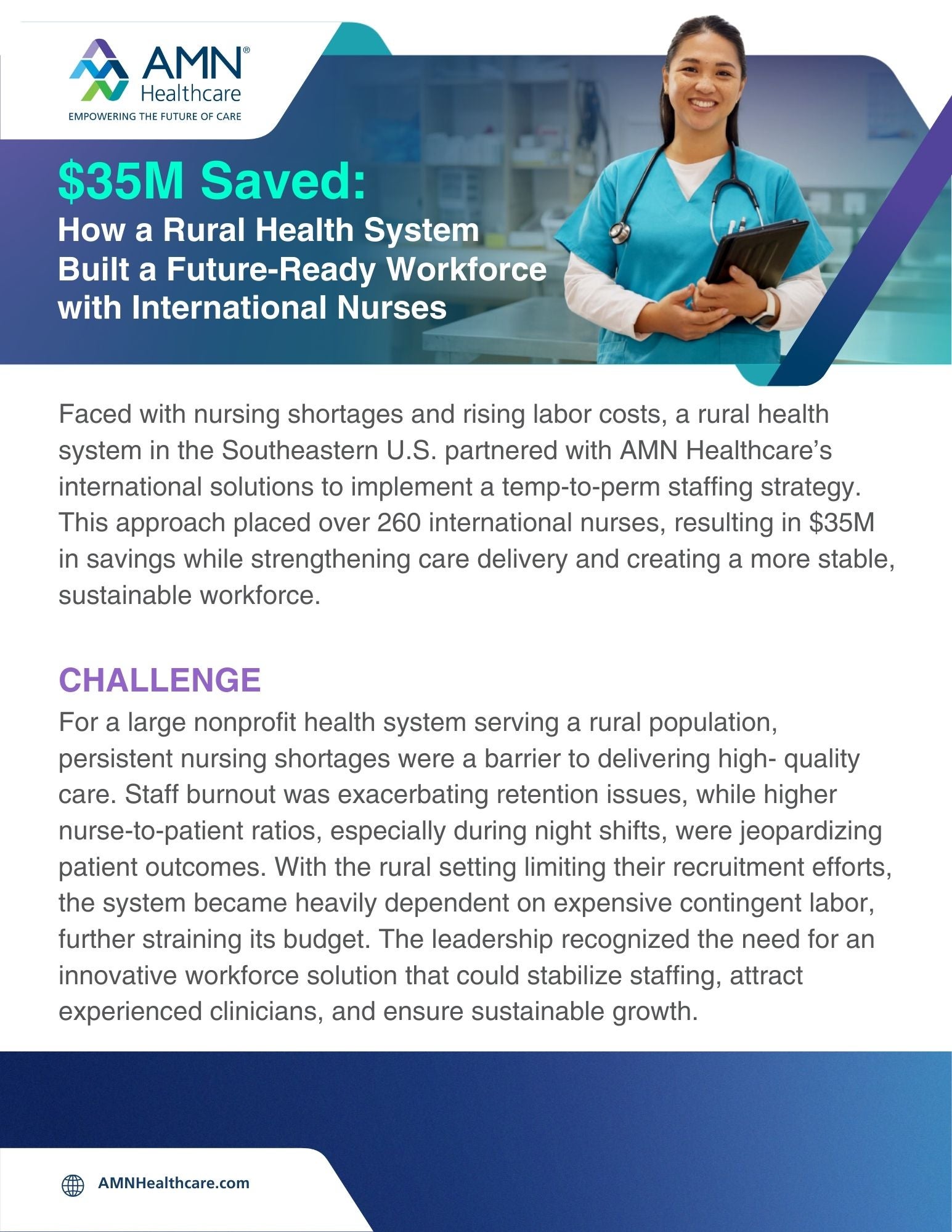
- See how a Southeastern health system partnered with AMN Healthcare to make international Temp-to-Perm a core pillar of its workforce strategy, deploying 260+ experienced international nurses across critical areas of need. By shifting from a temporary contract labor model to a scalable International Temp-to-Perm solution, the organization achieved $35M in cost savings, a strong 73% conversion rate, and a reliable long-term pipeline of skilled talent.
- Explore the full case study to learn how international Temp-to-Perm can help your organization stabilize staffing, reduce dependence on premium labor, and build a sustainable clinical workforce aligned to future demand.
Download white paper to learn more
Sponsored By

AONL does not support or endorse connections products or services.
Related Resources
Today in Nursing Leadership Podcast
Healthcare in a rural setting is very challenging. With limited resources, including staff, equipment, and supplies, many organizations are…
Headline
AONL’s Workforce Compendium is featured in the July/August issue of the Journal of Nursing Administration.
Today in Nursing Leadership Podcast
Improving nursing engagement while struggling with staffing shortages, burnout, and unbalanced ratios of novice to experienced nurses can seem…
Today in Nursing Leadership Podcast
Rise up from the ashes of the pandemic to create a sustainable future of the nursing workforce.
Sponsored White Papers
Learn how automating the process of collecting and returning patient belongings can improve nurse satisfaction and reduce administrative burnout.