



Nursing Leadership Survey Banner

Nursing Leadership Insight Study


The 2nd Generation Insight Study

The 2nd Generation Insight Study, developed in partnership with Chartis, provides one of the most comprehensive views to date of the realities facing nurse leaders across the country. With responses from 1,338 nurse leaders representing 430 hospitals and 210 health systems — nearly 10% of AONL's membership — this study illuminates the pressures, priorities and points of resilience shaping the profession today.

Download Executive Summary

When using this data in media, communications or presentations please reference as: American Organization for Nursing Leadership's 2025 Nursing Leadership Insight Study.
Previous Studies

Nurse Leadership Insight Study | 2025

The 2025 Nursing Leadership Insight Study examines changes in health care from the perspective of nurse leaders. Staff recruitment and retention remain the top concern, though less pronounced than in the November 2023 survey. While progress is noted in the emotional health and well-being of staff, challenges like workplace violence and financial constraints persist. New priorities in 2025, such as adopting new technologies and staff onboarding, reflect a shift toward operational efficiency. This report provides emerging insights from industry thought leaders on these pressing issues.

Nurse Leadership Insight Study | 2024

The latest Longitudinal Nursing Leadership Insight Study examines changes in health care from the perspective of nurse leaders. While still a primary challenge, the state of staff emotional health and well-being is at its best since July 2020. The challenge of travelers and the contingent workforce has also improved substantially since summer 2022. The mounting challenges today are staff recruitment and retention, financial resource availability and workplace violence. This report addresses effective solutions for various aspects, such as interdisciplinary collaboration, listening to direct care nurses and work-life balance.

Presentation of Report

Nurse Leader COVID-19 Longitudinal Study | 2022

The October 2022 Longitudinal Study focuses on new data and major shifts that have occurred in health care going back to the second survey conducted in February 2021. The new data from this survey indicates while the emotional health and well-being of nurse leaders has slightly improved, it emains the top issue facing nurse leaders, closely followed by staff retention and the cost of travel nursing. The October report also offers new insights into the day in the life of a nurse leader and their job satisfaction. The report continues to identify a gap between roles, with focus on chief nursing officers, directors, and managers.

Presentation of Report

Nurse Leader COVID-19 Longitudinal Study | August 2021

The August 2021 Longitudinal Study focuses on new data and major shifts that have occurred in health care going back to the first survey conducted in July 2020. The new data from this survey indicates access to PPE and the ability to communicate and implement changing policies have improved, while staffing shortages and the emotional health and well-being of nurse leaders have worsened. The August report also offers new insights into nurse leaders' needs and tactics being used to address the growing staffing shortage. The report continues to identify a gap between roles, with focus on chief nursing officers, directors, and managers.

Presentation of Report

Nurse Leader COVID-19 Longitudinal Study | February 2021

Nearly 2,500 nurse leaders completed the February 2021 survey with findings indicating a change in the primary challenges nurse leaders faced since last summer: access to PPE improved while mental health and staffing issues have worsened.

"We have seen nurses leaving the profession due to moral distress, burnout, and fatigue. I believe if we can address the root cause of this problem, we will retain more nurses and begin to stabilize the numbers in the workforce."

Respondent Profile

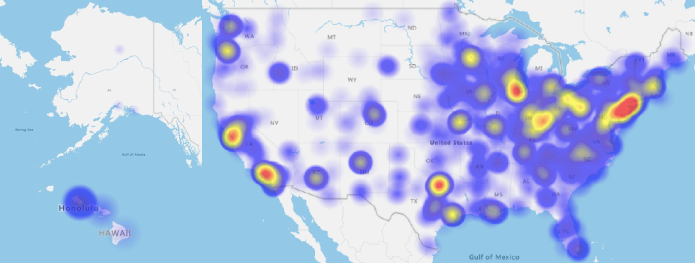
Heat map distribution of respondents' primary work zip codes
Survey respondents include nurse leaders at all levels across the continuum of care. The vast majority of respondents were either chief nursing officers or executives (17 percent), vice presidents, directors (34 percent), or managers (32 percent).

Fifty-two percent of respondents came from acute care hospitals, while 14 percent are from health system facilities and only four percent came from long-term care or post-acute care facilities. The respondents skewed to urban settings (51 percent) versus 29 percent suburban, and 20 percent rural.

Nurse Leader COVID-19 Longitudinal Study | August 2020

The survey, conducted in late July 2020, studied the impact of the COVID-19 pandemic on nursing leadership. After conducting interviews with nurse leaders from across the country, AONL and Joslin Marketing launched an online survey to measure nurse leaders' perceptions of key concerns, primary challenges, lasting changes and preparedness for future pandemics or surges.

Key Findings

Nursing staff received additional training to treat COVID-19 patients.
Biggest challenges included communicating and implementing policy changes, surge staffing, staff wellbeing, and access to PPE.
Support from their organizations and teams exceeded the expectations of nurse leaders.
Nurse leaders shared hundreds of stories providing insight into the daily reality of nurses on the frontline of this pandemic.